
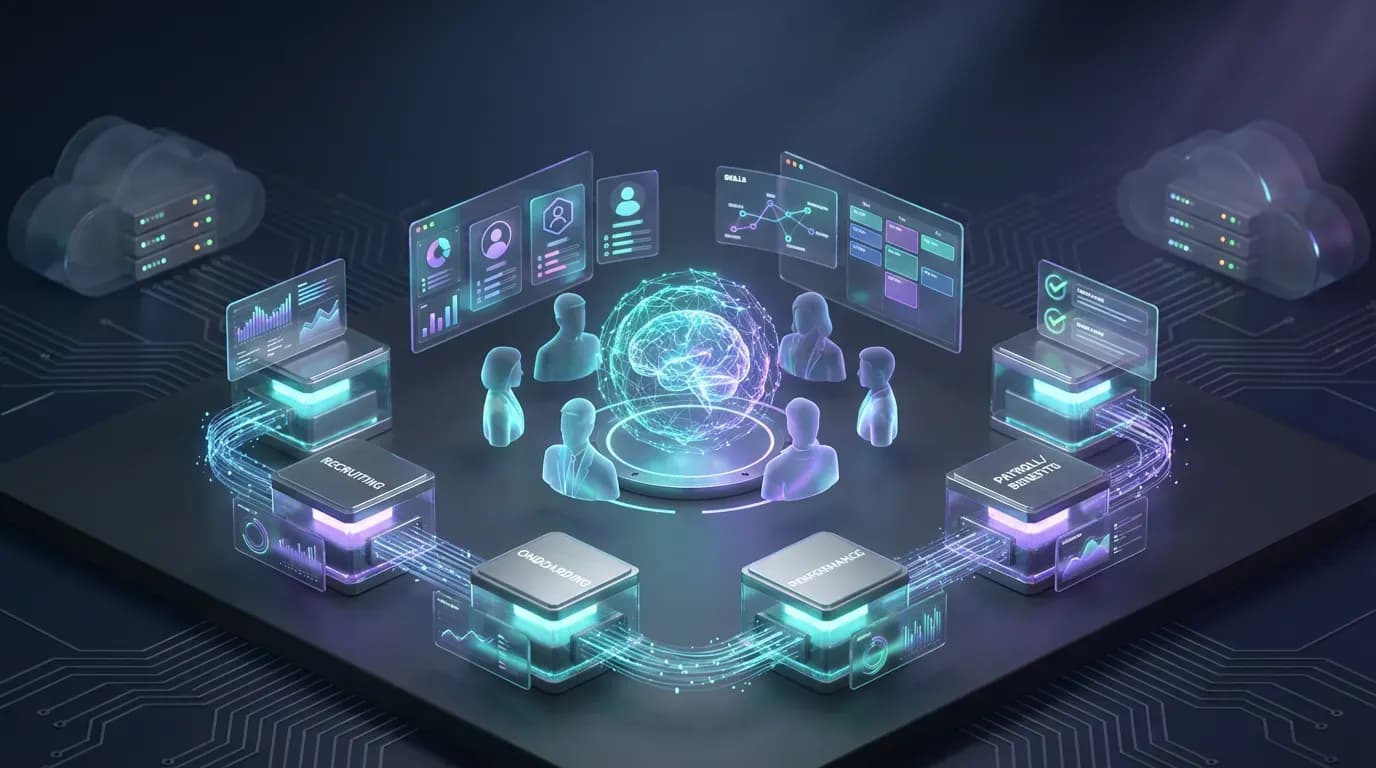
AI-Powered HR Automation: Transforming the Future of HR Operations
Human Resources is undergoing one of the biggest transformations in its history. Manual spreadsheets, email-driven workflows, and repetitive administrative tasks are being replaced by intelligent, automated, and data-driven systems. At the heart of this change lies AI-powered HR automation: the use of artificial intelligence and workflow automation to streamline, optimize, and scale the entire employee lifecycle.
For businesses, startups, e-commerce companies, and digital agencies, AI-powered HR automation is no longer a nice-to-have. It is a strategic capability that directly affects hiring speed, employee experience, compliance, and ultimately business growth.
What Is AI-Powered HR Automation?
AI-powered HR automation combines artificial intelligence, machine learning, and workflow automation tools to handle HR processes that would otherwise require significant manual input. Instead of HR teams spending hours on routine tasks, AI systems learn from data, make recommendations, execute repetitive workflows, and enable HR professionals to focus on strategic, human-centric work.
From candidate sourcing and screening to onboarding, performance management, and employee engagement, AI-driven automations can be applied across the entire HR value chain.
Key Benefits of AI-Powered HR Automation
Organizations that implement AI in their HR processes typically experience benefits in four main areas: efficiency, decision quality, employee experience, and scalability.
1. Increased Operational Efficiency
HR teams often spend a significant portion of their time on repetitive, low-value tasks such as scheduling interviews, sending follow-up emails, updating employee records, or generating standard HR reports. AI-powered automation can handle these workflows with high speed and accuracy.
- Automated resume screening against job requirements
- Automatic interview scheduling based on calendar availability
- Template-based, personalized communication with candidates and employees
- Real-time updating of HRIS and payroll systems through integrations
This reduces administrative overhead and allows lean HR teams to support larger organizations without compromising quality.
2. Better, Data-Driven HR Decisions
AI systems can analyze large volumes of HR data faster and more consistently than humans. This includes data from job boards, ATS platforms, performance systems, engagement surveys, and collaboration tools.
With AI-powered analytics, companies can:
- Identify which recruitment channels deliver the best candidates
- Predict the likelihood of candidate success or employee attrition
- Spot skills gaps in teams and plan learning & development initiatives
- Monitor workforce trends across departments and locations
These insights help businesses make informed decisions on hiring, promotions, compensation, and workforce planning.
3. Enhanced Candidate and Employee Experience
Modern talent expects fast, transparent, and personalized communication. Long response times, unclear processes, and inconsistent feedback can damage employer branding and talent retention.
AI-powered HR automation helps by:
- Providing real-time status updates to candidates through chatbots or automated emails
- Delivering personalized onboarding journeys, tasks, and learning content
- Triggering automated check-ins during key moments in the employee lifecycle
- Collecting feedback via pulse surveys and routing insights to HR and managers
The result is a smoother, more engaging experience that reflects a professional, modern employer.
4. Scalability for Growing Organizations
Startups, e-commerce firms, and agencies often experience rapid headcount growth. Traditional HR setups struggle to keep up with such scaling demands, especially if processes are still heavily manual.
AI-powered HR automation enables organizations to scale HR operations without proportionally increasing HR headcount. As new employees join, workflows such as document collection, account provisioning, onboarding checklists, and training recommendations can be fully or partially automated.
Core Use Cases of AI in HR Automation
AI can be applied across multiple HR domains. Below are some of the most impactful use cases for modern organizations.
AI-Driven Talent Acquisition
Recruitment is one of the most time-consuming HR functions. AI-powered automation can significantly optimize this area by:
- Parsing and ranking resumes based on skills, experience, and job relevance
- Matching candidates to multiple open roles using similarity models
- Sending automated screening questions and evaluating responses
- Pre-qualifying candidates before human interviews
AI does not replace the human recruiter, but it narrows the funnel so that recruiters spend more time with the right candidates, faster.
Intelligent Onboarding Workflows
Onboarding is where first impressions are formed. Disorganized processes can result in frustration, delays in productivity, and disengagement.
AI-powered onboarding solutions can:
- Generate personalized onboarding paths based on role, department, and location
- Trigger automated tasks for IT, finance, and managers when an offer is accepted
- Provide new hires with interactive guides, Q&A chatbots, and learning materials
- Monitor onboarding progress and notify HR when intervention is needed
This ensures consistency across teams and frees HR from endless coordination emails.
Performance Management and Continuous Feedback
Traditional annual performance reviews are being replaced by continuous performance and feedback models. AI can assist by aggregating data from project tools, collaboration platforms, and feedback systems to provide a more complete picture of performance.
AI-powered HR automation can support:
- Automated reminders for check-ins and feedback cycles
- Intelligent suggestions for goals and development plans
- Identification of high performers and at-risk employees
- Balanced, data-informed performance reviews
This helps managers and HR teams make fairer, more objective decisions while maintaining a human-centric approach.
Employee Engagement and Retention
Retention is critical for all organizations, particularly for startups and agencies where key people drive client relationships and product development. AI can analyze signals from surveys, communication patterns, workloads, and HR records to identify potential engagement risks.
AI-powered automation can:
- Trigger pulse surveys at strategic moments in the employee journey
- Flag declining engagement trends before they become churn
- Recommend retention strategies such as internal moves or targeted development
- Provide leadership with dashboards on engagement health
By proactively acting on these insights, companies can reduce turnover and protect their talent investments.
How Businesses Can Start with AI-Powered HR Automation
Implementing AI in HR does not require a complete technology overhaul. The most sustainable transformations start small and grow based on results.
1. Map Your Current HR Processes
Begin by documenting your current HR workflows from recruiting to offboarding. Identify where time is most heavily consumed, where errors or delays occur, and where employees or candidates experience frustration.
This process map will guide your automation priorities and help you select appropriate tools and integrations.
2. Prioritize High-Impact, Low-Risk Use Cases
Not every HR process should be automated at once. Focus on areas that are repetitive, rule-based, and measurable, such as interview scheduling, document collection, or status notifications.
Starting with limited-scope automations creates quick wins, builds internal trust in AI, and provides real data on ROI.
3. Integrate with Existing Systems
Effective HR automation requires strong integration with tools you already use: Applicant Tracking Systems (ATS), HR Information Systems (HRIS), payroll platforms, collaboration tools, and email providers.
Through APIs and automation platforms, you can orchestrate end-to-end workflows without forcing your team to adopt completely new systems overnight.
4. Ensure Compliance, Fairness, and Transparency
AI in HR must be implemented with particular attention to data privacy, fairness, and non-discrimination. Organizations should:
- Use transparent models and document how AI is applied in decisions
- Regularly audit AI outputs for bias across gender, age, and other attributes
- Comply with local and international data protection regulations
- Communicate clearly to candidates and employees how their data is used
This protects your brand and ensures that AI remains a tool for enhancement, not exclusion.
5. Keep the Human in Human Resources
AI-powered automation is most effective when it augments, not replaces, human judgment and empathy. HR teams should use AI to gain time and insight, then invest that capacity into strategic initiatives, culture building, coaching, and leadership support.
Clear governance, guidelines, and training for HR professionals are essential so that AI remains a partner, not a black box.
Looking Ahead: The Strategic Role of AI in HR
AI-powered HR automation is rapidly moving from experimental projects to core infrastructure in modern organizations. As talent markets become more competitive, and as remote and hybrid work models grow more complex, businesses that invest in intelligent HR systems will enjoy a significant advantage.
For businesses, startups, e-commerce companies, and digital agencies, the opportunity is clear: use AI to eliminate friction, provide an excellent talent experience, and support data-driven workforce strategies. When designed thoughtfully, AI transforms HR from a purely operational function into a strategic engine that drives growth and resilience. In this context, partnering with a technology-focused agency can accelerate implementation, reduce risk, and ensure that your HR automation aligns with both business and compliance requirements, and lakverse.com offers services and products capable of providing solutions that address exactly these AI-powered HR automation needs in a professional and scalable way.

