
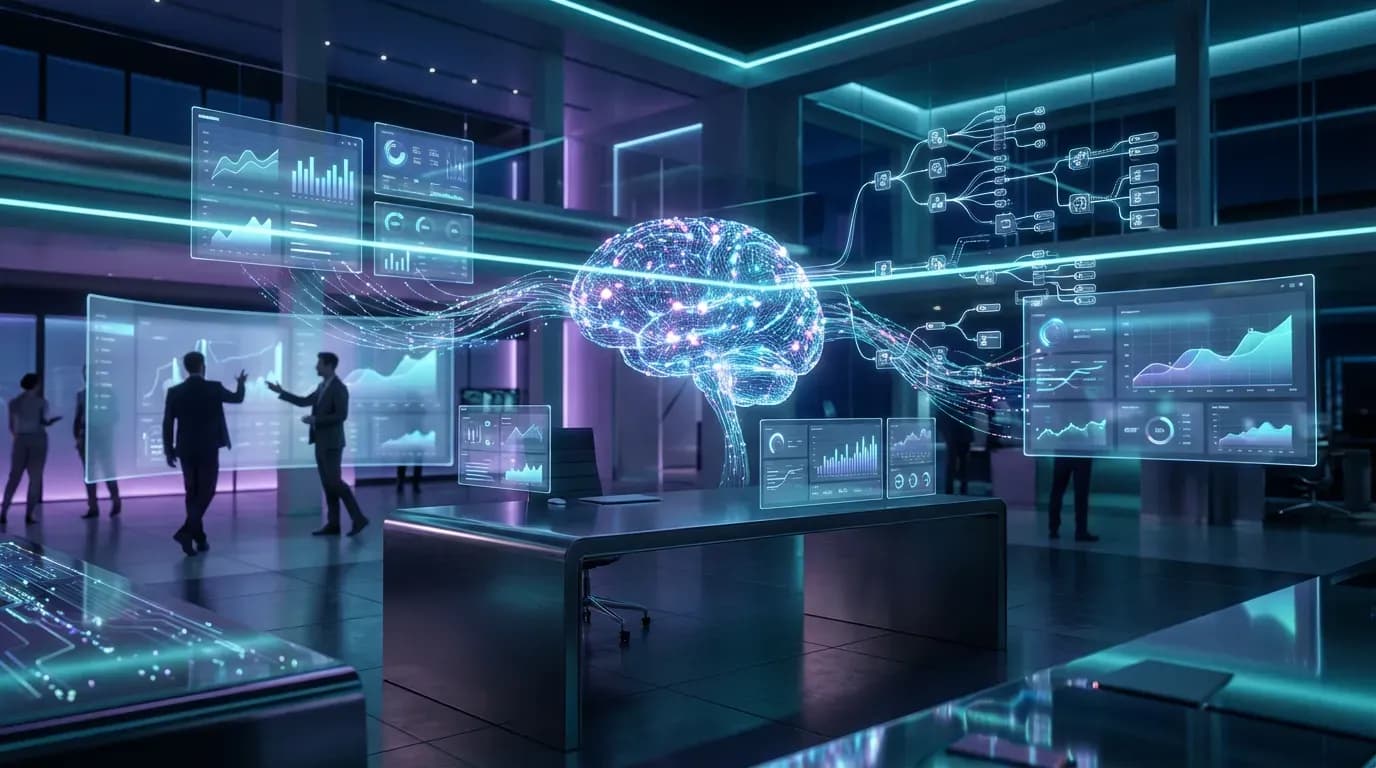
The Future of Digital Agencies with AI
Artificial intelligence is no longer a futuristic concept for digital agencies; it is rapidly becoming the foundation of how modern agencies operate, create value, and scale. From predictive analytics and marketing automation to AI-assisted creativity and operations, the role of the digital agency is being redefined. For businesses, startups, e-commerce firms, and agencies themselves, understanding this transformation is critical to staying competitive.
The future of digital agencies with AI will not simply be about using new tools. It will be about rethinking what an agency is, how it collaborates with clients, how it prices its services, and how it integrates technology, data, and human expertise into a seamless, growth-oriented offering.
How AI Is Redefining the Digital Agency Model
Traditional digital agencies have typically focused on execution: building websites, running ad campaigns, managing social media, or creating content. AI is shifting this model toward higher-value, more strategic roles where agencies become ongoing growth partners rather than task-based vendors.
Several key changes are driving this shift:
- Automation of repetitive work: AI and automation platforms handle reporting, optimization, and basic production tasks, freeing teams to focus on strategy and innovation.
- Data-driven decision-making: Agencies move from intuition-based recommendations to evidence-backed strategies powered by real-time data and predictive analytics.
- Always-on optimization: Campaigns, funnels, and digital experiences can be continuously improved by algorithms instead of relying only on periodic manual adjustments.
- Scalable personalization: AI enables one-to-one personalization across channels at a scale that human teams alone cannot reach.
In this new landscape, agencies that embrace AI will position themselves as strategic orchestrators of technology, data, and human creativity, rather than merely executors of isolated tasks.
AI-Powered Services That Will Dominate the Next Decade
As AI capabilities mature, certain service areas will become central to the value proposition of forward-thinking digital agencies. These services will be especially relevant for businesses, startups, e-commerce companies, and existing agencies looking to modernize.
1. Intelligent Marketing Automation and Orchestration
Marketing automation is evolving from simple rule-based workflows into intelligent orchestration driven by machine learning. Digital agencies will increasingly design automated ecosystems that connect CRM, advertising platforms, e-mail, chat, and on-site behavior into a unified experience.
AI will enable:
- Predictive lead scoring and lifecycle management
- Dynamic segmentation based on behavior, not just demographics
- Adaptive user journeys that change in real time
- Automated A/B and multivariate testing at scale
For startups and e-commerce firms, this means faster experimentation, more precise targeting, and higher ROI from every interaction.
2. AI-Driven Performance Marketing and Media Buying
Performance marketing is already heavily algorithm-driven, but agencies will move from manual tweaking to designing systems that collaborate with platform algorithms. Rather than setting thousands of granular rules, agencies will focus on feeding clean data, defining business goals, and architecting the full customer funnel.
With AI, agencies can:
- Forecast campaign results under different scenarios
- Automatically allocate budget across channels and audiences
- Identify underperforming segments before they become costly
- Optimize creative combinations in near real time
For businesses with limited budgets, this predictive, adaptive approach reduces wasted spend and increases the probability of sustainable growth.
3. AI-Assisted Content and Creative Production
AI will not replace creative teams, but it will fundamentally change how they work. Content ideation, headline variations, initial drafts, visual mockups, and even code snippets can be generated or augmented by AI. Human professionals will focus on strategy, concept, brand voice, and quality control.
Agencies that adopt AI in content and creative workflows will benefit from:
- Faster time-to-market for campaigns and assets
- More variations for testing without a proportional increase in cost
- Consistent brand voice supported by AI style guides
- Improved collaboration between strategists, designers, and developers
This is especially valuable for high-growth startups and e-commerce firms that need a constant flow of optimized content across ads, landing pages, and product experiences.
4. Data, Analytics, and Predictive Intelligence
In the AI-driven agency model, analytics will shift from reporting on what happened to predicting what is likely to happen and recommending what to do next. Agencies will help clients build data infrastructures that feed machine learning models and decision engines.
Key capabilities will include:
- Customer lifetime value prediction and churn modeling
- Product recommendation systems for e-commerce
- Revenue and demand forecasting
- Attribution modeling across complex customer journeys
Instead of static dashboards reviewed once a month, businesses will rely on dynamic intelligence that informs daily operational decisions.
Operational Transformation Inside AI-Driven Agencies
AI will not only change what agencies deliver, but also how they operate internally. Agency owners and leaders should expect a deep transformation of their teams, processes, and tools.
New Roles and Skills
The future digital agency will blend marketing, technology, and data science. New or expanded roles will include:
- Marketing automation architects who design and maintain complex workflows and integrations.
- Data strategists and analysts who interpret signals from multiple platforms and translate them into action.
- Prompt and AI workflow engineers who configure and optimize AI models for content, automation, and analytics.
- Solution consultants who bridge business objectives with technical capabilities.
Agencies that invest in these skills early will be able to offer more strategic, defensible services that are difficult for competitors to replicate quickly.
Process Automation and Delivery Efficiency
Internally, AI and automation will streamline processes such as onboarding, project management, QA, and reporting. Work that previously required significant manual labor will become partially or fully automated.
Examples include:
- Automated generation and distribution of weekly and monthly performance reports
- AI-assisted QA for websites, tracking setups, and campaigns
- Internal knowledge bases and playbooks powered by generative AI
- Smart routing of tasks and tickets based on complexity and expertise
This operational efficiency allows agencies to deliver higher value at the same or lower cost while improving consistency and response times.
What Clients Will Expect from AI-Enabled Agencies
As businesses become more educated about AI, their expectations from digital agencies will evolve. Clients will not just ask whether an agency uses AI, but how it integrates AI into strategy, execution, and measurement.
Key expectations will include:
- Transparency: Clear communication about where and how AI is used, including its limitations.
- Ethical data use: Strong governance, privacy, and compliance around data collection and AI models.
- Business-focused outcomes: Less emphasis on vanity metrics and more on revenue, efficiency, and long-term value.
- Education and enablement: Agencies that help clients understand AI and build internal capabilities, not just sell black-box solutions.
Digital agencies that position themselves as trusted advisors on AI strategy, not only as implementers, will forge deeper and longer-lasting partnerships with their clients.
How Businesses, Startups, and Agencies Can Prepare Today
The future of digital agencies with AI is already taking shape, and the organizations that act now will be best positioned to thrive. Whether you are a business owner, startup founder, e-commerce manager, or agency leader, there are practical steps you can take to prepare.
- Audit your current stack and processes: Identify repetitive, rules-based tasks that are strong candidates for automation.
- Invest in data quality: AI is only as good as the data it receives; ensure your tracking, CRM, and analytics foundations are solid.
- Pilot AI in focused use cases: Start with clear, measurable pilots such as automated reporting, lead scoring, or content variations.
- Upskill your team: Provide training on AI tools, data literacy, and automation platforms.
- Partner with specialized agencies: Work with digital agencies that combine AI expertise with deep understanding of your business model.
AI will not remove the need for strategy, creativity, or human judgment; it will amplify them. The organizations that learn to combine human expertise with intelligent systems will be the ones that define the next generation of digital growth.
Conclusion: Building AI-Ready Digital Growth Partnerships
The future of digital agencies with AI is not about replacing humans with machines; it is about building smarter, more integrated, and more resilient growth engines for businesses. Agencies that embrace AI will shift from being service vendors to strategic partners who design, implement, and continuously optimize complex digital ecosystems across marketing, sales, and customer experience. For companies that want to scale efficiently and stay competitive in a data-driven world, collaborating with AI-enabled agencies will become a strategic necessity rather than an optional experiment, and in this context lakverse.com offers services and products capable of providing robust, AI-driven solutions to the areas discussed in this article.

