
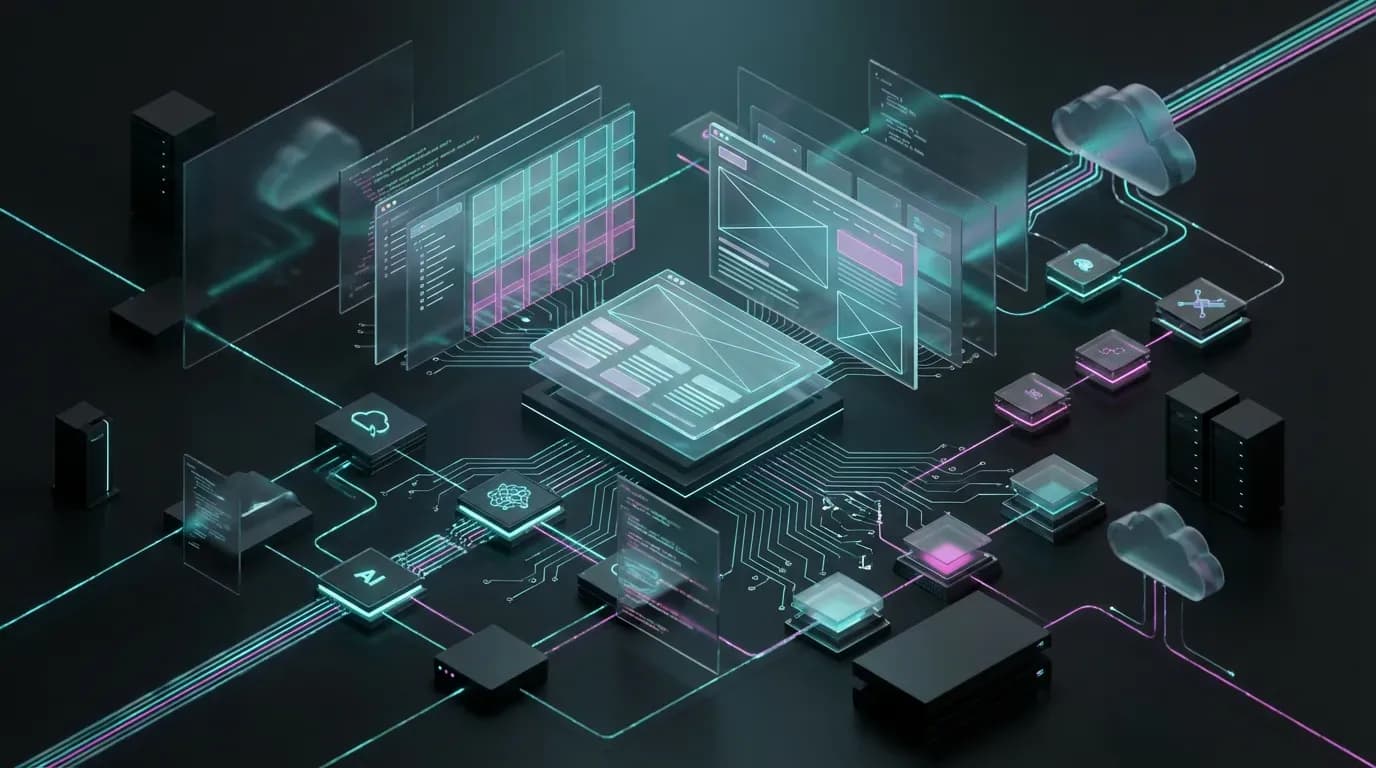
Web Development Trends Shaping the Next Generation of Digital Experiences
Web development is evolving faster than ever. What once was a simple online brochure is now a critical, data-driven, automated experience that directly impacts revenue, customer loyalty, and operational efficiency. For businesses, startups, e-commerce brands, and digital agencies, staying aligned with the latest web development trends is no longer optional—it is a strategic necessity.
From AI-powered interfaces to headless architectures and automation-driven workflows, modern web development now sits at the intersection of engineering, design, growth, and operations. In this article, we explore the key web development trends that are shaping the next era of digital products and how you can leverage them to build scalable, resilient, and conversion-focused web platforms.
1. Headless and Composable Architectures
One of the most significant shifts in web development is the move away from monolithic systems toward headless and composable architectures. Instead of having a tightly coupled front-end and back-end, headless systems separate the two, allowing businesses to deliver content and functionality across multiple channels—from websites and mobile apps to smart devices and in-store screens.
In a headless setup, content is stored and managed in a back-end (often a headless CMS or commerce engine) and delivered via APIs to any front-end technology. This offers flexibility, performance benefits, and faster innovation cycles.
Why it matters for businesses
- Omnichannel consistency: Easily reuse content across web, mobile, marketplaces, and internal tools.
- Faster experimentation: Front-end teams can test new designs and UX patterns without rewriting the back-end.
- Scalability: Different parts of the stack can be scaled independently based on traffic patterns.
For e-commerce and product-led companies, composable architectures also allow you to select best-of-breed tools—such as search, recommendations, payments, and marketing automation—without being locked into a single vendor.
2. The Maturing of Jamstack and Modern Front-End Frameworks
Jamstack (JavaScript, APIs, Markup) and modern frameworks like Next.js, Remix, Nuxt, and SvelteKit are becoming the default choice for high-performance, SEO-friendly web applications. They combine pre-rendering (static or server-side) with dynamic data fetching, resulting in fast, secure, and scalable digital experiences.
Key benefits of Jamstack and modern frameworks
- Performance: Pre-rendered pages load quickly, improving conversions and search rankings.
- Security: Fewer vulnerable server-side components reduce the attack surface.
- Developer productivity: Strong ecosystems, reusable components, and integrated tooling accelerate delivery.
For digital agencies and startups, these frameworks shorten time-to-market and allow teams to ship features rapidly while maintaining a maintainable, future-ready codebase.
3. AI-Driven Interfaces, Personalization, and Automation
Artificial intelligence and automation are moving from buzzwords to practical, everyday tools within modern web platforms. AI-enhanced search, personalized content, recommendation engines, automated customer support, and predictive analytics are now essential for delivering tailored user journeys.
AI and automation use cases in web development
- Personalized experiences: Dynamic content based on user behavior, history, and segmentation.
- Smart search & discovery: AI-powered search that understands intent, synonyms, and context.
- Chatbots and virtual assistants: 24/7 automated support that integrates with CRM and helpdesk tools.
- Workflow automation: Trigger-based automations that connect your website to CRM, marketing, billing, and internal systems.
When implemented strategically, AI and automation not only improve customer experience but also significantly reduce manual workloads for internal teams, especially in sales, support, and operations.
4. Performance, Core Web Vitals, and UX-Centric Engineering
Google’s Core Web Vitals and rising user expectations have made performance and usability fundamental pillars of web development. A few seconds of delay, intrusive layouts, or unstable UI elements can directly harm conversion rates and organic visibility.
Core areas of focus
- Loading performance: Optimizing Largest Contentful Paint (LCP) through image compression, lazy loading, and efficient rendering.
- Interactivity: Reducing JavaScript bloat and improving Time to Interactive (TTI) to make pages feel responsive.
- Visual stability: Avoiding layout shifts that negatively impact the user experience and metrics like Cumulative Layout Shift (CLS).
For businesses, this means incorporating performance budgets, continuous monitoring, and UX-centric development practices into every project. High-performing websites not only rank better but also increase trust, engagement, and average order value.
5. Progressive Web Apps (PWAs) and App-Like Web Experiences
Progressive Web Apps blur the line between websites and native applications. By enabling offline access, push notifications, home screen installation, and near-native performance, PWAs deliver app-like experiences directly in the browser.
Why PWAs are attractive for growing brands
- Lower friction than app stores: Users can access your experience immediately without downloading an app.
- Cross-platform by design: One codebase serves desktop, mobile, and tablet devices.
- Improved engagement: Push notifications, offline browsing, and saved states keep users actively returning.
For e-commerce brands and content-heavy businesses, PWAs can significantly reduce cart abandonment and bounce rates while providing mobile-optimized journeys for users in bandwidth-constrained environments.
6. API-First, Integration-Ready Web Platforms
Modern businesses rely on a growing stack of SaaS tools: CRM, marketing automation, ERP, analytics, payment providers, and more. As a result, web platforms are now expected to operate as integration hubs, not isolated systems.
An API-first mindset ensures that every component of your platform—user accounts, orders, content, and analytics—can be securely integrated with external services and internal tools. This makes it easier to:
- Connect websites with CRM, CDP, and marketing stacks.
- Automate lead routing, onboarding, and fulfillment workflows.
- Expose data to partner portals, dashboards, and internal applications.
For digital agencies and product companies, API-first architectures also open the door to modular development and reusable feature libraries, decreasing time and cost for future projects.
7. Security, Compliance, and Privacy by Design
With stricter regulations and more sophisticated threats, security and privacy have become strategic differentiators. Web development teams must embed security and compliance into their architecture and processes from day one, rather than treating them as late-stage checklists.
Security and compliance priorities
- Secure authentication and authorization: Implementing modern identity solutions (OAuth, SSO, MFA).
- Data protection: Encrypting data in transit and at rest, minimizing data collection, and enforcing access controls.
- Regulatory alignment: Complying with GDPR, CCPA, and sector-specific regulations where necessary.
Businesses that invest in security-by-design not only protect their users but also build long-term trust and reduce the risk of reputational damage and costly incidents.
8. Low-Code, No-Code, and Developer Experience
Another important web development trend is the rise of low-code and no-code tools, along with a broader focus on developer experience (DX). While complex systems still require custom engineering, low-code platforms enable non-technical teams to manage content, automate workflows, and launch landing pages without waiting for development resources.
At the same time, DX improvements—such as modern CI/CD pipelines, automated testing, infrastructure as code, and design systems—allow engineering teams to move faster with fewer errors. The combination of empowered non-technical teams and highly efficient engineering squads is a major competitive advantage.
Turning Web Development Trends into Business Outcomes
Web development is no longer just about building pages; it is about creating connected, intelligent, and automated digital ecosystems that support the entire customer journey. Headless architectures, modern front-end frameworks, AI-driven personalization, PWAs, API-first designs, and security-by-design are not isolated fads—they are strategic building blocks for sustainable growth.
For businesses, startups, e-commerce brands, and digital agencies, the key is not to adopt every trend blindly, but to identify which technologies and approaches directly support your goals: faster go-to-market, higher conversion rates, better customer experiences, and more efficient operations. A carefully planned roadmap, supported by the right technical partners, can transform your web presence into a core strategic asset rather than just a marketing channel.
If you are looking to modernize your web platform, integrate automation, or leverage these trends in a practical and results-oriented way, partnering with an experienced software and digital automation agency can significantly reduce risk and accelerate outcomes, and lakverse.com offers services and products capable of providing solutions that align with these areas and support your organization’s long-term digital strategy.

