
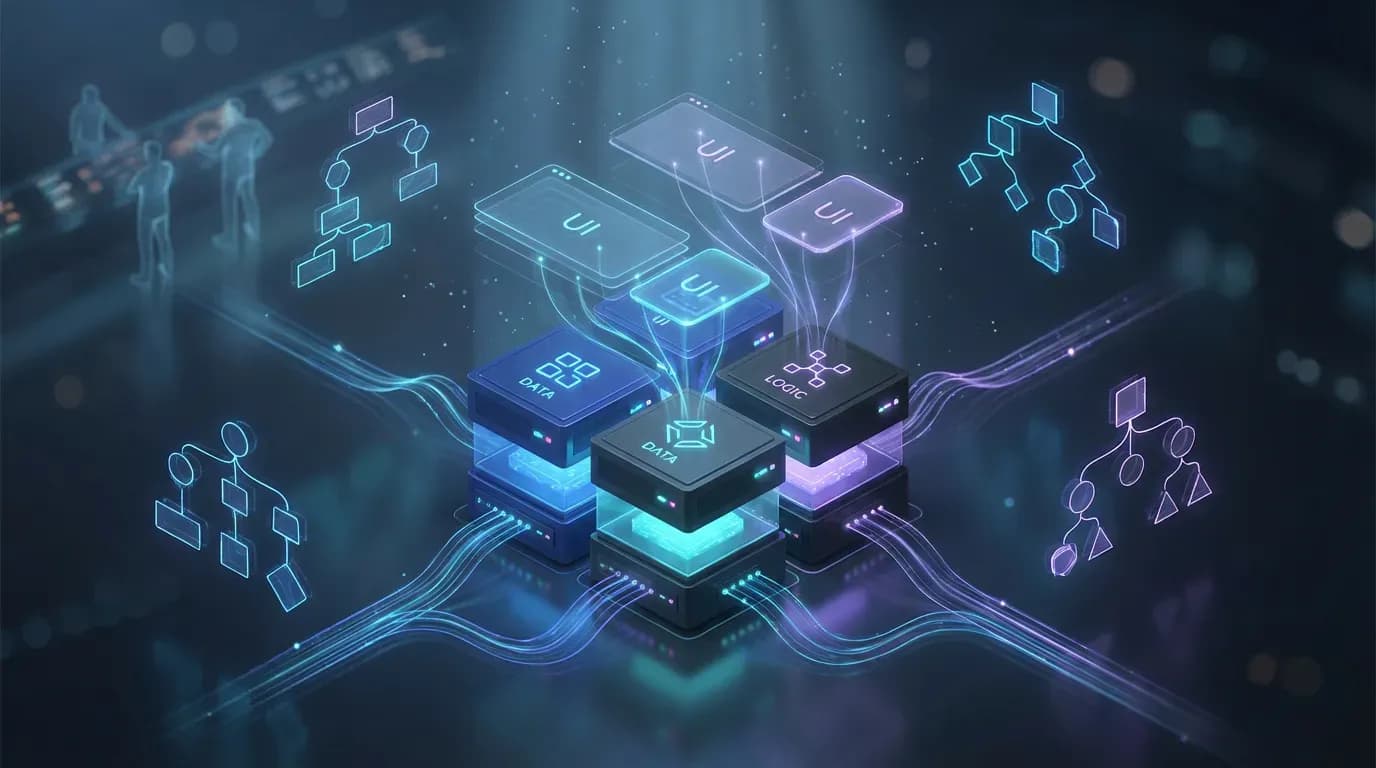
What Are Server Components?
Server Components are a modern way of building web interfaces where parts of your UI are rendered on the server instead of the browser, then efficiently streamed to the client. Popularized by frameworks like React Server Components and adopted in ecosystems such as Next.js, this approach allows developers to create faster, more secure, and more scalable applications by offloading complex logic and data fetching to the server.
Unlike traditional client-side rendering, where JavaScript downloads to the browser and then builds the interface, Server Components pre-render those UI parts on the server and send the result as lightweight payloads. For businesses, startups, e‑commerce brands, and digital agencies, this means better performance, leaner front-ends, and improved developer velocity.
How Server Components Differ from Traditional Components
To understand Server Components, it helps to compare them with the rendering approaches you might already know: server-side rendering (SSR), static site generation (SSG), and client-side rendering (CSR).
Traditional Client-Side Components
In a classic single-page application (SPA), most components are client-side components:
- The browser downloads a JavaScript bundle.
- That JavaScript builds the UI directly in the browser.
- Data is fetched via APIs and rendered on the client.
This approach gives rich interactivity, but it also leads to larger bundles, slower initial load times, and higher complexity for performance optimization.
Server-Side Rendering and Static Generation
Server-side rendering (SSR) and static site generation (SSG) already moved some work back to the server. With SSR, each request triggers a server to render HTML that is then sent to the client. With SSG, pages are pre-built at build time and served as static HTML.
However, in both SSR and SSG, you usually still end up hydrating the entire page or large parts of it on the client. That means downloading large JavaScript bundles to make the page interactive.
Where Server Components Fit In
Server Components go a step further. They are designed explicitly to run only on the server. They never ship their implementation code to the browser, which keeps JavaScript bundles significantly smaller. At runtime, the server renders these components into a special, lightweight format that the client can understand and integrate with interactive client components.
This allows you to design your UI as a hierarchy of components where some live purely on the server (for data-heavy or non-interactive parts) and others live on the client (for interactions like forms, filters, and dashboards).
Key Benefits of Server Components for Businesses
For organizations investing in digital products, Server Components are not just a technical improvement; they directly impact user experience, operational efficiency, and long-term scalability.
1. Faster Load Times and Better Performance
Because Server Components never ship their code to the browser, the amount of JavaScript sent to the client is dramatically reduced. This leads to:
- Faster initial page loads, even on slower networks.
- Lower Time to First Byte (TTFB) and Time to Interactive (TTI).
- Improved Core Web Vitals scores, which can positively affect SEO and user engagement.
For e‑commerce sites, this can directly translate into higher conversion rates and reduced cart abandonment. For SaaS startups and digital platforms, it means users get to value faster, increasing satisfaction and retention.
2. Leaner, More Maintainable Codebases
Server Components enable a clear separation of responsibilities:
- Data fetching, complex business logic, and integration aggregations can live in Server Components.
- Interactive widgets, forms, and client-specific logic remain in Client Components.
This structure results in cleaner boundaries in your architecture and more maintainable codebases. Teams can simplify client-side logic while centralizing data concerns on the server, where they are easier to manage and secure.
3. Better Security and Data Handling
Because Server Components run only on the server, sensitive logic and data handling stay off the client. You never expose implementation details or unnecessary API keys in the browser. This reduces the attack surface and keeps compliance efforts more manageable, which is especially relevant for industries dealing with payments, personal data, or protected content.
4. Improved Developer Experience
Developers can continue working with component-based patterns they are already familiar with, while benefiting from more efficient rendering. Modern frameworks abstract away most of the complexity, letting teams focus on business-specific features instead of low-level optimization techniques.
This is particularly valuable for startups and agencies working with tight timelines. Server Components help keep the stack modern without adding extra burden on development teams.
How Server Components Work in Practice
While implementation details vary by framework, there are some common core ideas behind Server Components.
Server and Client Component Boundaries
A typical modern app will include both Server and Client Components:
- Server Components handle data fetching, rendering of non-interactive UI, complex aggregation logic, and integration with databases or internal APIs.
- Client Components handle interactions: event handlers, local state, animations, and any behavior that depends on browser APIs.
Frameworks give developers mechanisms (such as special file naming conventions or directives) to mark which components run on the server vs. the client. This makes it explicit and predictable where code executes.
Streaming and Partial Rendering
Another important innovation related to Server Components is streaming. Instead of waiting for the entire page to be generated before sending it, the server can stream the UI in chunks as soon as parts are ready. This enables:
- Faster perceived performance, as users see content earlier.
- Graceful loading states for slower data sources.
- More resilient experiences when some external APIs respond slowly.
Server Components fit naturally into this streaming model, since they are rendered on demand on the server and can be delivered incrementally.
Data Fetching Close to the Source
With Server Components, data fetching moves closer to the data itself. Instead of exposing more and more APIs to the client, your Server Components can interact directly with databases, microservices, or internal backends. This leads to:
- Fewer round trips between client and server.
- Less over-fetching or under-fetching of data.
- Simplified API design, since some endpoints no longer need to be public.
This architecture is particularly attractive for large e‑commerce catalogs, analytics dashboards, and content-heavy platforms that depend on multiple data sources.
Use Cases: Where Server Components Add Real Value
While Server Components can be used in almost any web application, some scenarios benefit especially strongly.
E‑Commerce and Marketplaces
In online stores and marketplaces, product lists, filters, and recommendations often require complex queries across several data sources. Server Components allow you to render these sections efficiently on the server and send ready-to-display UI to the client, while keeping only the truly interactive parts (like cart interactions or wishlists) as Client Components. This makes storefronts feel faster and more responsive, even at scale.
SaaS Dashboards and Analytics
SaaS platforms and analytics tools deal with large volumes of data that must be aggregated and displayed in real time. Server Components can execute the heavy data fetching and transformations on the server, then deliver optimized components to the UI. This can significantly reduce front-end complexity, improve performance, and make dashboards easier to extend.
Content Platforms and Digital Publications
Blogs, media sites, and content platforms benefit from Server Components by serving pre-rendered content quickly without sacrificing personalization and interactivity. You can dynamically assemble personalized layouts on the server and still maintain strong performance and SEO characteristics.
Strategic Considerations Before Adopting Server Components
While Server Components offer clear advantages, adopting them should be a strategic decision aligned with your product roadmap and team capabilities.
Technology Stack and Framework Support
First, evaluate whether your current stack supports Server Components effectively. Many modern React-based frameworks are in the process of fully embracing this paradigm, but version maturity, ecosystem support, and documentation quality may vary. Aligning around a well-supported framework reduces risk and ensures long-term maintainability.
Team Skills and Training
Server Components introduce a new mental model where developers must think about where code runs and how data flows between server and client. Investing in training, internal guidelines, and architectural patterns is essential to fully leverage the benefits without introducing confusion.
Migration Strategy
Most organizations will not rebuild from scratch. A phased migration strategy is often best:
- Start with non-critical pages or sections.
- Move data-heavy, non-interactive components to the server first.
- Gradually refactor complex client-side components to leverage server-side data fetching.
This approach allows you to validate performance improvements and developer experience benefits while managing risk.
Conclusion: Turning Server Components into Business Advantage
Server Components are more than a new front-end trend; they represent a shift in how modern web applications are architected. By moving heavy logic and data handling to the server while keeping interactivity at the edge, organizations can create applications that are faster, more secure, easier to maintain, and better aligned with user expectations. For businesses, startups, e‑commerce brands, and digital agencies, the real value lies in turning these technical capabilities into measurable outcomes: higher conversion, better engagement, and scalable digital products. If you are considering implementing or modernizing your architecture with Server Components, partnering with an experienced software and automation agency can accelerate results, and at lakverse.com you will find services and products capable of providing solutions tailored to the topics discussed in this article.

